Drainage Solutions
Drainage problems can damage yards fast, so we help Austin properties move water away cleanly.
Drainage problems can damage yards fast, so we help Austin properties move water away cleanly.
Pooled water near walkways, soggy turf after a light rain, and muddy spots that never seem to dry out are signs your yard is telling you something. Drainage trouble can make outdoor spaces harder to use, stress plantings, and leave low areas looking worn down long before the rest of the landscape does.
Fieldstone Landscape Co. helps homeowners and small businesses in Austin, TX with drainage solutions that are built around the layout of the property, the surface water pattern, and the areas that need the most relief. We look for the source of the problem, then recommend changes that help water move away from the right places.
Drainage issues do not always show up as standing water first. Often, the clues are smaller and easier to overlook until they become routine.
When these signs repeat, the surface of the yard may be directing water toward the wrong area. The fix depends on whether the concern is runoff, poor grading, an outlet issue, or a drainage path that has become blocked or overloaded.
Good drainage work starts with seeing how water moves across the property, not just where it ends up. We review the areas where runoff begins, the points where it slows down, and the places where it has nowhere else to go.
We look at slope, soil level changes, and hardscape edges to understand whether water is traveling across the property or collecting in one spot. Even a small dip can create a recurring wet area.
Some locations need closer attention because they sit lower than the rest of the yard. Patio edges, planter borders, side yards, and areas near downspout outlets often show the first signs of stress.
We trace where water should leave the site and where it is getting delayed. That helps us recommend drainage solutions that support the whole layout rather than just masking one wet patch.
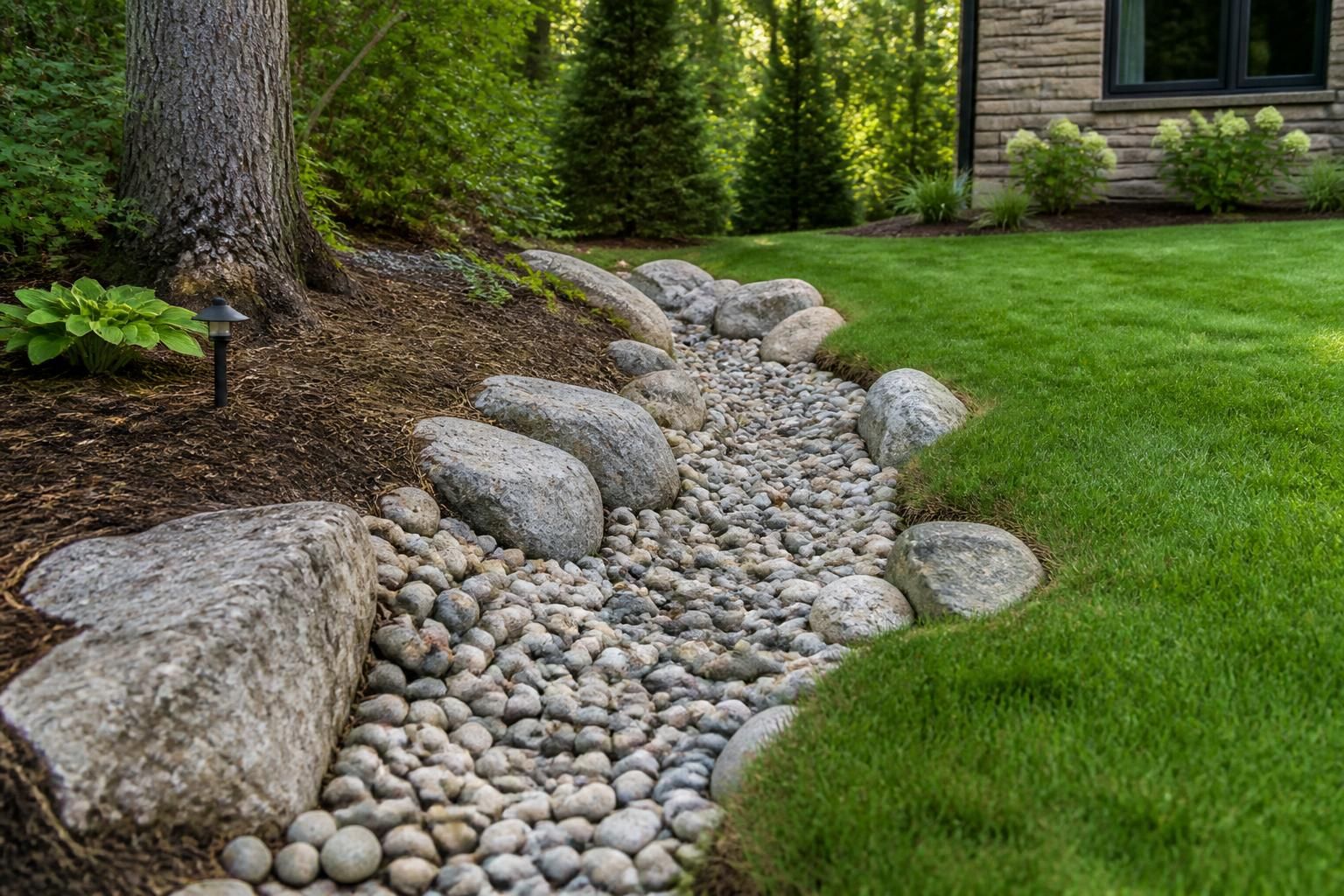
Different properties call for different approaches. A drainage solution should fit the yard, the hardscape, and the type of water movement causing the trouble.
Fieldstone Landscape Co. provides drainage solutions as part of broader landscape work, which means the fix can be planned alongside lawn care, hardscaping, or planting improvements when needed.
Every property is different, so we keep the process practical and centered on what the yard is actually doing. That avoids guesswork and helps the solution match the space.
This approach helps keep the work focused. Rather than treating every damp spot the same way, we match the solution to the reason the water is gathering there.
Drainage problems can wear down more than the lawn. Water that stays too long in one place can affect beds, edges, and outdoor surfaces.
Saturated turf can thin out, while planting beds may lose soil or shift mulch downhill. Redirecting runoff can help reduce that stress and keep the landscape looking cleaner.
Hard surfaces often reveal drainage problems quickly because water has nowhere to hide. When runoff reaches a patio edge or walkway, it can create slick spots, staining, or washout near joints and borders.
Excess water around root zones can leave trees and shrubs sitting in conditions they were not planted for. Good drainage planning helps reduce the strain on nearby plantings and the surrounding soil.
Some sites need a simple correction, while others benefit from a more layered plan. Drainage solutions are often most effective when they are paired with the rest of the landscape, rather than handled as a separate patch.
You may want drainage work if:
In Austin, TX, drainage needs often show up where a yard combines sloped areas, hard surfaces, and planting spaces. The right correction helps those parts work together instead of fighting each other.
When you call Fieldstone Landscape Co., the conversation starts with the symptoms you are seeing and where they happen. We will want to know whether the issue is tied to lawn areas, patios, beds, or a spot that keeps changing after rain.
From there, we look at the site conditions and talk through the most practical path forward. That may involve adjusting grading, improving drainage paths, or combining drainage work with other landscape changes so the solution fits the whole property.
You do not need to know the right fix before reaching out. A clear description of the problem is enough to start. If you have noticed recurring puddles, soft ground, or erosion, those details help shape the next step.
Low spots, poor slope, blocked runoff paths, and hardscape edges can all trap water. Sometimes the issue comes from a combination of these factors rather than one obvious cause.
Yes. Mud often means water is staying at the surface too long. A drainage solution can help move that water away so the area has a chance to dry more evenly.
They often do. Patios and other hard surfaces can change the way water moves across a site, so drainage should be considered alongside the layout of the hardscape.
They can, and that is part of why planning matters. Drainage work should support the planting areas while reducing excess water where it is causing trouble.
Runoff problems usually show water moving across the site toward a low area, while grading issues often create a persistent dip or slope that keeps the water there. A site review helps separate the two.
Yes. Drainage is often most useful when it is coordinated with landscape design, lawn care, hardscaping, or tree and shrub work so the whole space works together.
If your yard keeps holding water or the same wet patch returns after every storm, it is time to address the source. Fieldstone Landscape Co. provides drainage solutions for homes and small businesses across Austin, Round Rock, Cedar Park, Pflugerville, Georgetown, and Lakeway. Call +15125550163 to talk through what you are seeing and plan the next step.
A Few Common Questions
Get Started
Tell us about your property and the work you want done, and we will help you take the next step with a clear plan.